
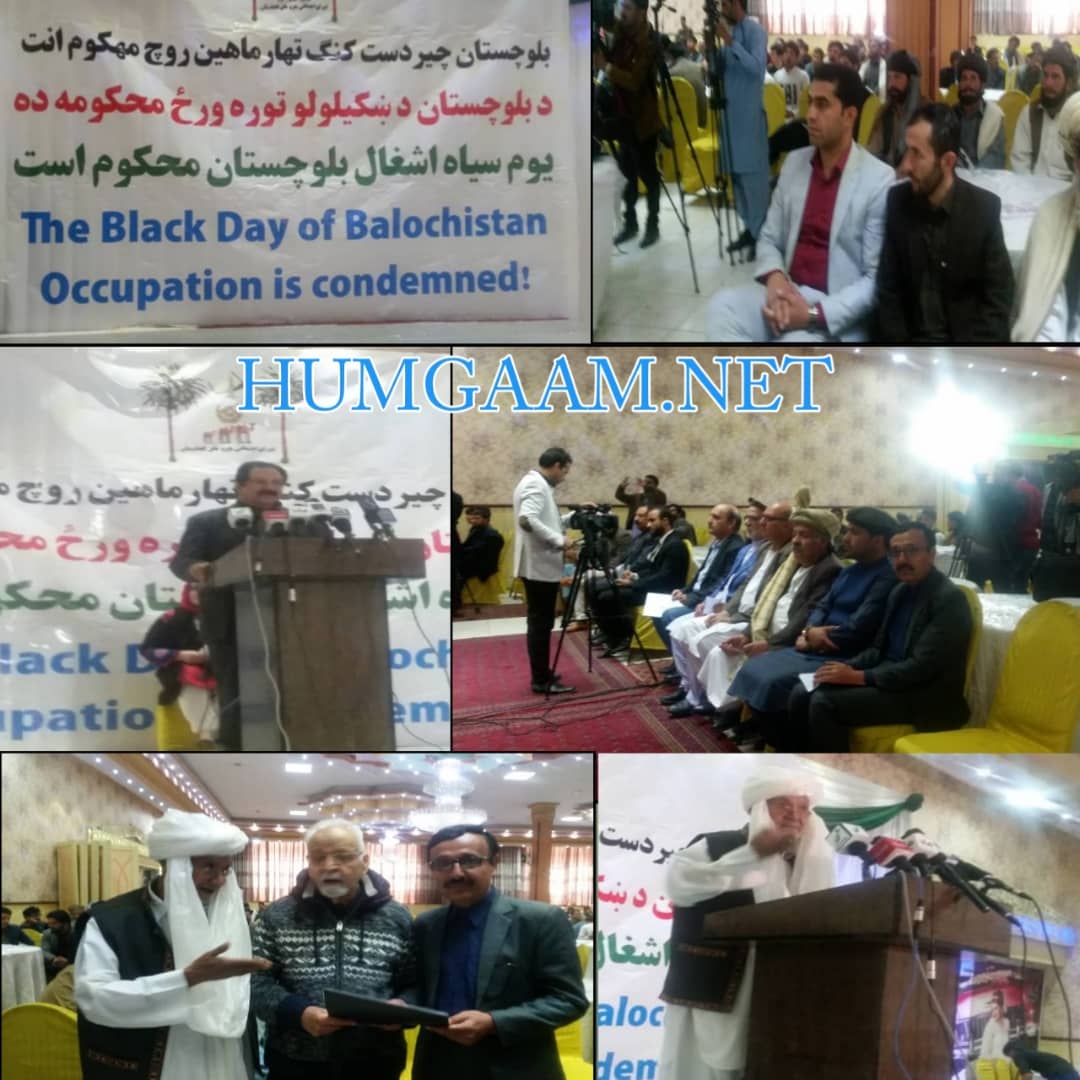
کابل(ہمگام نیوز) نماہندہ ,ھمگام, کابل کی رپورٹ کے مطابق افغانستان کے دارالحکومت میں آج 27 مارچ کو افغانستان کی’ بلوچ شوری’ کی جانب سے کابل میں بلوچ قوم کی طرف سے یوم سیاہ کے طور پر منایا گیا.واضع رہے آج ہی کے دن27مارچ 1948ء کو قابض پاکستان آرمی کی طرف سے بلوچستان پر بلوچ قوم کی مرضی و منشاء کے خلاف جبری طور پر بزور اسلحہ قبضہ کیا گیا تھا۔آج کے اس منعقد کردہ پروگرام سے عبدالستار پردلی ،محترم سلیمان لائق، ڈاکٹر شیر آقا،ولایت ہلمند کے سابق گورنر جنرل حاجی نعیم خان بلوچ، افغان تحقیقی ادارہ ‘نوین ‘ کے سربراہ ڈاکٹر عبداللہ ھیواد،اور آزادی پسند پشتون صحافی جناب سیلاب مسید صاحب و بہت سے دیگر گراں قدر مقررین نے خطاب کرتے ہوئے اپنے خیالات کا اظہار کیا . اس کے علاوہ اس پروگرام میں فری بلوچستان موومنٹ کی جانب سے سے جان محمد بلوچ جبکہ بلوچ نیشنل موومنٹ کی جانب سے دوسرے شرکا کے ساتھ ،ساتھ گودی صدف بلوچ نے اس پروگرام میں بی این ایم کی نماہندگی کرتے ہوئے خطاب کیا ۔یاد رہے آج کی دن دنیا کے کئی ممالک اور سوشل میڈیا پر #27MarchBlackDay کے موضوع سے بیشتر آزادی پسند بلوچ فرزندان پاکستانی قبضہ کے خلاف فری بلوچستان موومنٹ کے پلیٹ فارم سے مختلف قسم کے احتجاجی اور آگاہی پروگرام و مظاہرے اور تقریبات منعقد کئے جارہے ہیں.پروگرام کے آخر میں شامل شرکا میں جان محمد بلوچ نے FBMکی جانب سے 27 مارچ یوم قبضہ کی مناسبت سے جاری کردہ اعلامیہ کی سافٹ اور ہارڈ کاپی کو تقسیم کیا ۔
Balochistan Occupation Day – 27 March 1948
One policy that all empires employ to prolong their colonialism is the policy of ‘divide and rule.’ British Imperial rulers applied this policy most effectively in India and beyond. British invaded Balochistan in 1839 to shield India from outsiders. After the occupation of Balochistan, the British divided Balochistan into three parts to weaken Baloch struggle for independence. Currently, Balochistan is divided between Afghanistan, Iran and Pakistan.
The Baloch struggle for independence from Britain continued until Baloch regained their independence on 11 August 1947. However, Baloch freedom lasted only for a few months. The newly created religious state of Pakistan offered the Baloch nation to join Pakistan on basis of one religion (Islam) but when the Baloch elected representative from both houses – House of Lords and House of Common – rejected the notion of joining Pakistan. The fanatic state of Pakistan then initiated its conspiracies to weaken Balochistan by employing the divide and rule policy and eventually invaded the eastern part of Balochistan on 27 March 1948.
The Baloch nation has persistently continued their struggle to reclaim their freedom from the very day that Pakistan has forcibly invaded and illegally annexed Balochistan. Ever since the Punjabi rulers of Pakistan have carried out five major military offensives in Balochistan to counter the Baloch resistance for national liberation.
One of these major military attacks against Baloch people was during 1973 – 77. About 90,000 Punjabi Islamic mercenaries were dispatched to Balochistan where they were confronted with 60,000 Baloch partisans. It is estimated that the Pakistani army has killed about 15,000 to 25,000 Baloch people during this time and lost thousands of its soldiers as well. In the course of this period, the Baloch Sarmachars (freedom fighters) managed to liberate Balochistan from Pakistan for a short period but then Pakistan sought help from the Shah of Iran to help it defeat the Baloch freedom struggle. The nexus of Iran and Pakistan weakened and temporarily dispersed the Baloch liberation forces. The Baloch aspirations for freedom, however, never faded away and desire for national freedom continued to grow.
In early 2000 the Baloch people once again reignited the flame of free Balochistan. Since then the Pakistani security forces have killed thousands of Baloch people including women, children and elderly. Tens of thousands of Baloch political and human rights activists have been abducted and disappeared. A number of mass graves were discovered in different regions of Balochistan including three mass graves in Tootak, Khuzdar in January 2014, which contained the decomposed dead bodies of more than hundred people only three of whom were identified as previously abducted Baloch activists. The rest of the dead bodies were buried in a hurry without any formal identification and the site where graves were found was sealed by the army for public access.
Therefore, 27 March is marked as one of the darkest days in Baloch history. The Baloch nation, like the rest of free nations, wants to be free from any form of colonisation and subjugation. The Baloch people have proved throughout their history that they are secular people who value humanity, justice, freedom democracy. They have proved that they would never stop their struggle for freedom and equality and they will continue their struggle to victory.
One policy that all empires employ to prolong their colonialism is the policy of ‘divide and rule.’ British Imperial rulers applied this policy most effectively in India and beyond. British invaded Balochistan in 1839 to shield India from outsiders. After the occupation of Balochistan, the British divided Balochistan into three parts to weaken Baloch struggle for independence. Currently, Balochistan is divided between Afghanistan, Iran and Pakistan.
The Baloch struggle for independence from Britain continued until Baloch regained their independence on 11 August 1947. However, Baloch freedom lasted only for a few months. The newly created religious state of Pakistan offered the Baloch nation to join Pakistan on basis of one religion (Islam) but when the Baloch elected representative from both houses – House of Lords and House of Common – rejected the notion of joining Pakistan. The fanatic state of Pakistan then initiated its conspiracies to weaken Balochistan by employing the divide and rule policy and eventually invaded the eastern part of Balochistan on 27 March 1948.
The Baloch nation has persistently continued their struggle to reclaim their freedom from the very day that Pakistan has forcibly invaded and illegally annexed Balochistan. Ever since the Punjabi rulers of Pakistan have carried out five major military offensives in Balochistan to counter the Baloch resistance for national liberation.
One of these major military attacks against Baloch people was during 1973 – 77. About 90,000 Punjabi Islamic mercenaries were dispatched to Balochistan where they were confronted with 60,000 Baloch partisans. It is estimated that the Pakistani army has killed about 15,000 to 25,000 Baloch people during this time and lost thousands of its soldiers as well. In the course of this period, the Baloch Sarmachars (freedom fighters) managed to liberate Balochistan from Pakistan for a short period but then Pakistan sought help from the Shah of Iran to help it defeat the Baloch freedom struggle. The nexus of Iran and Pakistan weakened and temporarily dispersed the Baloch liberation forces. The Baloch aspirations for freedom, however, never faded away and desire for national freedom continued to grow.
In early 2000 the Baloch people once again reignited the flame of free Balochistan. Since then the Pakistani security forces have killed thousands of Baloch people including women, children and elderly. Tens of thousands of Baloch political and human rights activists have been abducted and disappeared. A number of mass graves were discovered in different regions of Balochistan including three mass graves in Tootak, Khuzdar in January 2014, which contained the decomposed dead bodies of more than hundred people only three of whom were identified as previously abducted Baloch activists. The rest of the dead bodies were buried in a hurry without any formal identification and the site where graves were found was sealed by the army for public access.
Therefore, 27 March is marked as one of the darkest days in Baloch history. The Baloch nation, like the rest of free nations, wants to be free from any form of colonization and subjugation. The Baloch people have proved throughout their history that they are secular people who value humanity, justice, freedom democracy. They have proved that they would never stop their struggle for freedom and equality and they will continue their struggle to victory.